
Kill Bill(s) - Under Review
A film of two halves.

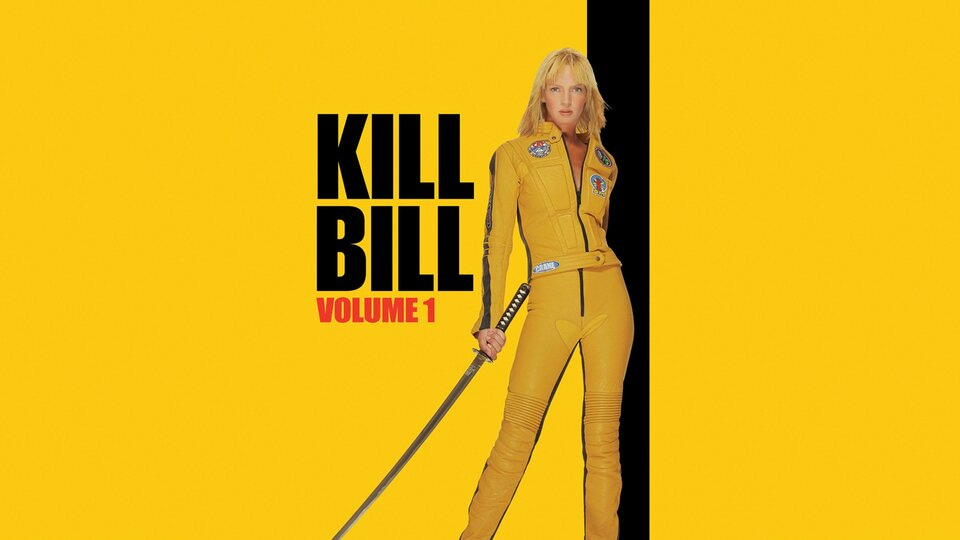
Kill Bill: Vol.1 (2003)
It’s perhaps only with hindsight that one can appreciate just how big a risk Quentin Tarantino took with Kill Bill. His previous movies had many merits but they didn’t include great action sequences. Sure, the bit where Mr Pink gets hit by the car in Reservoir Dogs is pretty cool but nothing in Old Banana Chin’s cannon suggested he had it in him to deliver a fight scene that makes The Matrix Reloaded’s ‘Burly Brawl’ seem very small beer indeed.
As the rumble at the House Of Blue Leaves is destined to be remembered as one of cinema’s greatest scraps, Kill Bill will go down as the film where QT picked up the goalposts and popped them down onto a fresh playing surface. Not content with embracing knock-down, drag-out, balls-to-the-wall action, Tarantino also ditches his signature rapid-fire, pop culture-obsessed dialogue.
To some, the latter was every bit as startling as the former, but it was really just a sensible decision by a savvy filmmaker. In the wake of Dogs and Pulp Fiction, it was hard to find a crime film in which gangsters didn’t discuss their favourite episodes of The Prison or analyse the lyrics of the Bay City Rollers. Rather than follow both himself and his acolytes, Tarantino not only picked up his ball but stabbed it with a pair of garden shears.
This isn’t to say that Kill Bill: Vol. 1 is neither quotable nor referential. True, the script doesn’t really sparkle but it’s shot through with the rich melodramatic dialogue of comic books, anime films and pulp crime literature. And while the homages and knowing nods are present - Daryl Hannah whistling the theme from British horror film Twisted Nerve; snatches from the scores for the Isaac Hayes vehicle Truck Turner and Raymond Burr’s Ironside - they don’t draw attention to themselves in the same way as Reservoir Dogs’ Madonna speech or Pulp Fiction’s burger talk.
Kill Bill: Vol.1 isn’t simply an exercise in Tarantino trying out new things, however. He may be the first live-action director to successfully embrace animation since Watership Down’s Martin Rosen, but he’s still got the ability to assemble remarkable soundtracks (even shrill Japanese girl group The 5.6.7.8’s sound great in the context of the film). And he hasn’t lost his knack for casting. Darryl Hannah has been rubbish in everything since 1987’s Wall Street (and she was pretty rope in that, too) but she’s strong and sexy as hired killer Elle Driver. Vivica A. Fox as fellow assassin Vernita Green, also puts on a display that those familiar with her straight-to-video offerings might imagine as being beyond her.
Of course, the other woman giving a great showing of herself is Uma Thurman. As The Bride, Thurman takes a genre staple - the hero out to avenge the death of loved one - and adds layers of dimension rarely seen in films of this type. From mourning the passing of her child and reasoning with the daughter of one of her victims to socking it to 80 yakuza - if only Kill Bill had more concern for character and a touch less blood, Thurman could have been a contender for gongs other than the MTV Movie Awards’ Best Fight trinket.
As excellent as Thurman is, Kill Bill remains a movie created by a director who really understands what his audience wants (resurrecting Michael Parks’ Texas Ranger from From Dusk Till Dawn is a masterstroke). A film with no ambitions to make the world a better place, this is down ‘n’ dirty entertainment of the highest order - a film so bloody, you’ll need handfuls of popcorn to soak up the claret.
And what’s more, by editing in scratchy ‘Our Future Presentation’ and Shaw Brothers titlecards, and shooting the whole thing through a piss-stained lens, Tarantino also managed to make the last great movie of the 1970s.
Keep reading with a 7-day free trial
Subscribe to As Luck Would Have It to keep reading this post and get 7 days of free access to the full post archives.