
Good Cop/Bad Cop, Part 1
How the friendly, neighbourhood bobby became public enemy number one.

There is a brilliant moment midway through John Carpenter’s Assault On Precinct 13 (176) where one of the besieged cop shop’s receptionists exclaims, “Why would anyone want to shoot at a police station?!” Why indeed.
In the majority of Hollywood movies, the police are portrayed as a force for good.
This was especially true of the 1950s and early ‘60s, where the image of the straitlaced, law-abiding copper was so strong, it filtered over into people’s perceptions of the real-life American police force.
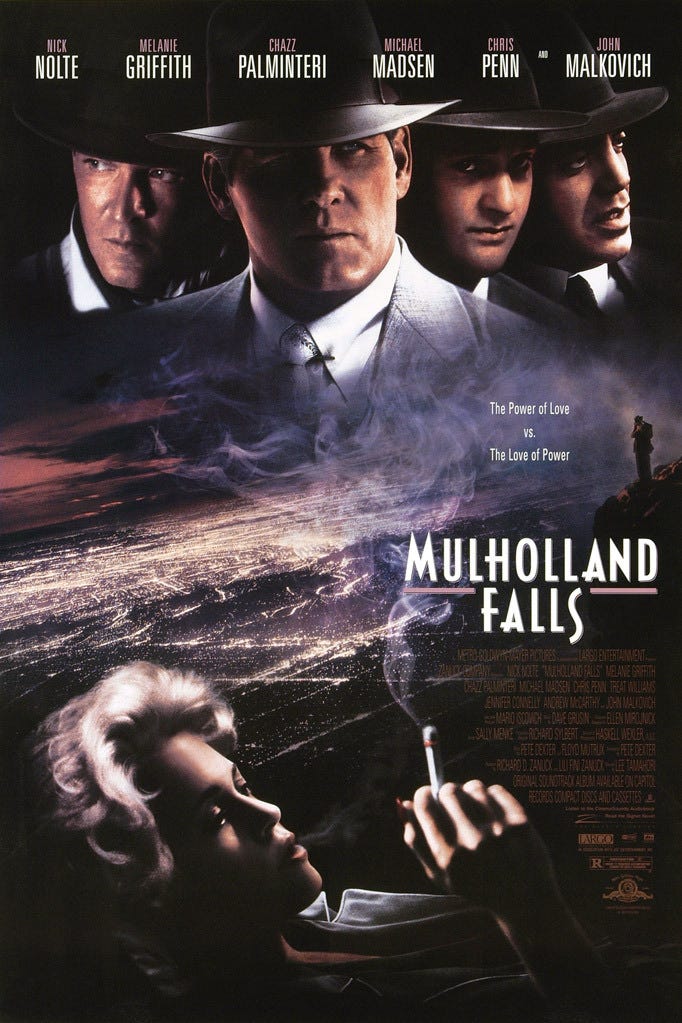
Of course, we are all well aware of the police’s darks side, a side that Hollywood’s reflected in pictures like Dirty Harry (1971), Prince Of The City (1981) and Bad Lieutenant (1992). Then Lee Tamahori’s period police picture Mulholland Falls (1996) arrived to point out that, rather than being a modern phenomena, there has always been something ambiguous about the behaviour of the police.
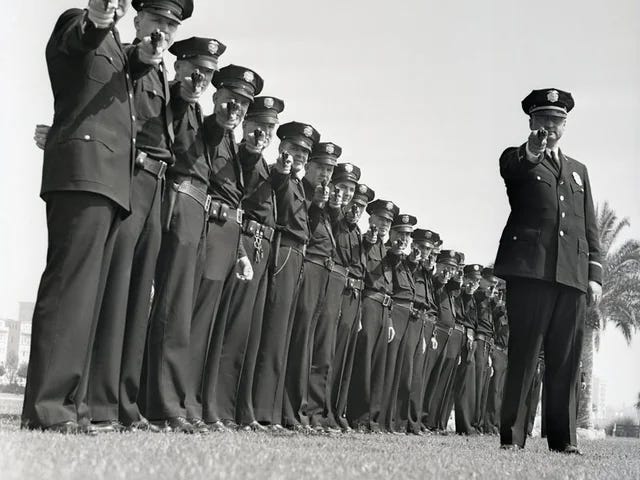
With his coffee, donuts and flat cap, the Hollywood policeman of the 1950s was rather an endearing figure. In a never-ending stream of B-movies, the police were depicted as either upholders of the law or comic characters who always come good in the end. While the politically-aware Roger Corman might have intended some criticism of the police in his pictures, it rarely rose about the level of a teenager pointing out how square dem lousy cops is.
In the mainstream movies of the time, the image of the police was even more clean-cut. The paranoia of the age, together with the powerful Hays Office, meant the force was invariably depicted in a decent light. In films like Richard Fleischer’s The Narrow Margin (1952), the policeman’s the modern-day equivalent of the Western sheriff. If he was tough, it was because that was part of his job. If he slapped a woman, it was because she deserved to be slapped*.
Come the end of the day, the cop would go home, hang up his badge, kiss his wife and play with his children. Lantern-jawed and hard as nails he might have been, nevertheless, the 1950s policeman remained kind and polite to the extent that it was perfectly okay yto ask him for directrions.
The real shady characters of 1940s and 50s crime movies were the private detectives, the Philip Marlowes, Mike Hammers and Sam Spades of this world. Although they operated on the right side of the law, the private dick was a very different creature to cop, liable to hit women - you know, even one’s who didn’t deserve it* - and perform break-ins. The anti-heroes of a hundred film noirs (films noir?), dicks did do good.
It just so happened that their brand of good was often indistinguisable from the bad done by their adversaries.
The move towards depicting the police as an ambiguous force on-screen began in the 1950s. In Fritz Lang’s The Big Heat (1953), Glen Ford plays an honest cop who quits the force in order to pursue his wife’s killer in the manner he believes appropriate. One imagines this portrayal of a police officer as a vigilante proved distressing to 1950s audiences.
It certainly wasn’t a hit with other film-makers. Although there were a few exceptions to the rule - most notably Orson Welles’ bent cop Hank Quinlan in 1958’s brilliant Touch Of Evil), officers on-screen remained squeaky clean until the end of the 1960s. The image was brought under attack by films like Bonnie And Clyde (1967) and John Milius’ Dillinger (1973) with their glamorous depiction of the gangster life doing much to blur the line between good and evil.
*Not true in any case, of course, but a frighteningly regular occurrence in ‘40s and ‘50s crime pictures.